
Bell County Bankruptcy Records Search
Bell County bankruptcy records are filed and managed through the Western District of Texas Bankruptcy Court, Waco Division. If you need to search for a bankruptcy case tied to Bell County, you can use PACER online or contact the Waco Division clerk's office directly. The Waco Division covers Bell County along with other Central Texas counties. Filings include Chapter 7 liquidation, Chapter 11 reorganization, and Chapter 13 repayment cases. All of these are public records under federal law.
Bell County Overview
Bell County Bankruptcy Court
Bell County falls under the Western District of Texas Bankruptcy Court, Waco Division. The Waco Division is located at 800 Franklin Ave., Waco, TX 76701. The clerk's office can be reached at 254-750-1513. Bell County residents and businesses file their bankruptcy cases here, and hearings are held in Waco.
The Waco Division covers Bell County and other Central Texas counties in the Western District. The court processes Chapter 7, Chapter 11, and Chapter 13 cases. If you need to confirm a filing, pull a docket sheet, or get copies of documents in a case, PACER is the primary access point. The Waco clerk's office can answer basic case status questions by phone.
| Court | U.S. Bankruptcy Court, Western District of Texas |
|---|---|
| Division | Waco Division |
| Address | 800 Franklin Ave., Waco, TX 76701 |
| Phone | 254-750-1513 |
| Website | txwb.uscourts.gov |
The U.S. Trustee for Bell County cases is part of Region 7. The Austin field office, which covers the Waco Division, is located at 903 San Jacinto Blvd., Suite 230, Austin, TX 78701, phone (512) 916-5328. The U.S. Trustee appoints case trustees and monitors bankruptcy case administration for all Western District cases.
Searching Bell County Bankruptcy Records
The primary tool for finding Bell County bankruptcy records is PACER. You set up a free account and pay a small per-page fee to view documents in a case. Basic information like the debtor name, chapter type, case number, and filing date is often available at no charge. You can search by debtor name, case number, attorney name, or filing date range.
The Western District of Texas is fully on the PACER system, so all electronic case files are available online. For older paper-based records that predate electronic filing, you may need to contact the Waco clerk's office or file a records request with the National Archives. Older cases can be ordered by mail through the archives system.
Bell County bankruptcy records are public under 11 U.S.C. § 107. Most documents filed in a case are open to anyone. Courts can seal specific items in narrow circumstances, but public access is the default. Under Fed. R. Bankr. P. 9037, all filed documents must have Social Security numbers, birth dates, and financial account numbers partially redacted.
The Bell County Clerk maintains property records and deed history at the Belton courthouse. These records can be relevant in bankruptcy proceedings when the court or trustee needs to verify real estate owned by the debtor. Bankruptcy case records themselves are only available through the federal court system, not through the county.
The Western District of Texas Bankruptcy Court handles all Bell County bankruptcy filings through the Waco Division, which serves the Central Texas region.
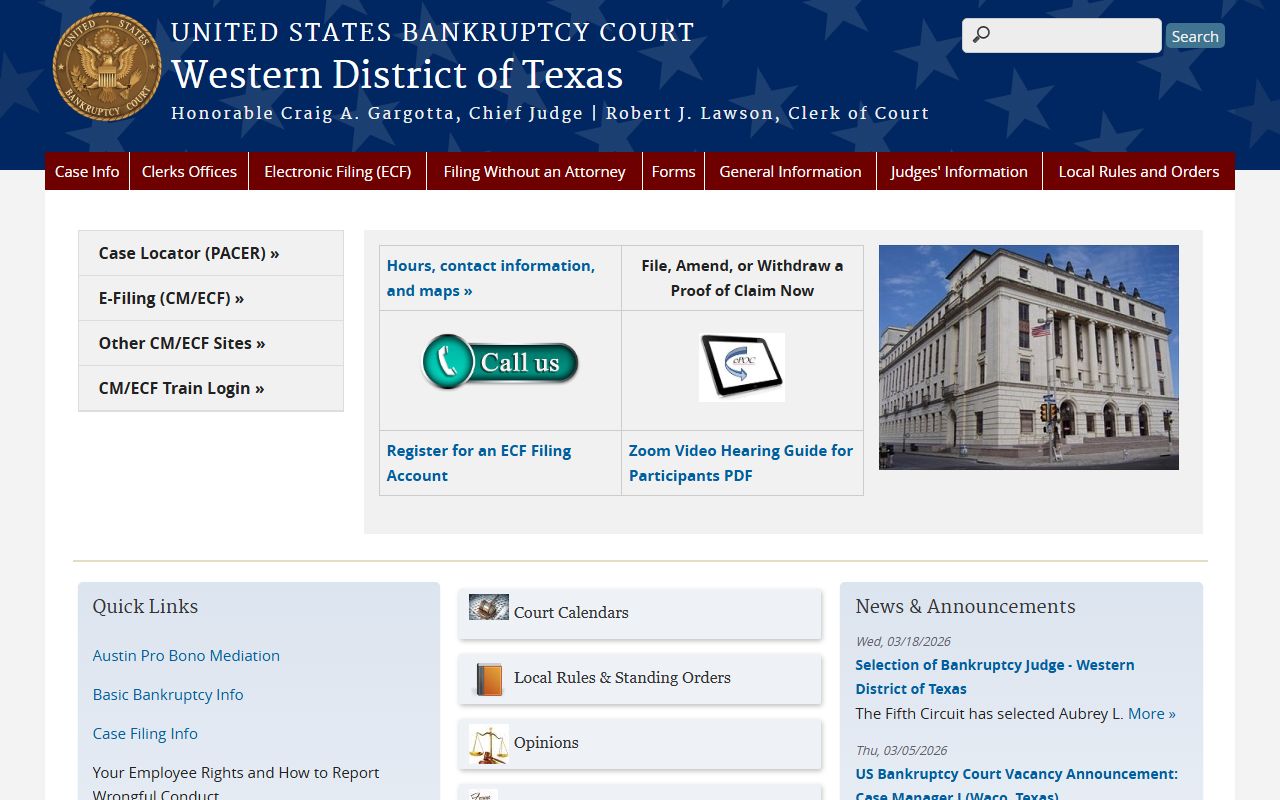
The Western District Bankruptcy Court processes Bell County cases and provides full electronic access to dockets and filings through PACER.
Filing for Bankruptcy in Bell County
Bell County residents file their bankruptcy petitions and schedules with the Western District of Texas, Waco Division. The court's local rules and all required forms are posted on the Western District forms page. Pro se filers must complete a Pro Se Questionnaire and file a creditor matrix in alphabetical order. A Verification of Matrix form must be the last page of the creditor matrix submission.
Attorneys file through CM/ECF. Pro se individuals can file electronically or bring paper forms to the Waco clerk's office. The Waco office does not accept cash. Bring a cashier's check or money order made payable to "Clerk, U.S. Bankruptcy Court." The San Antonio division accepts cash, but the Waco and other Texas federal court offices do not.
Filing fees are set federally. Chapter 7 costs $338. Chapter 13 is $313. Chapter 11 is $1,738. Installment payments are available, and at least 50% of the fee must be paid within seven days after filing. A full fee waiver is available for individuals with income below 150% of the federal poverty guideline. Apply for a waiver at the time you submit your petition.
Before filing, individual debtors must complete an approved credit counseling course within 180 days before their petition date. After the case ends, they must finish a debtor education course before a discharge is issued. Both types of approved providers are listed on the U.S. Trustee website.
Note: The Waco Division clerk's office does not accept cash payments. Use a cashier's check or money order for any fees paid in person.
Bell County Bankruptcy Resources
The key resources for Bell County bankruptcy matters are the Waco Division clerk's office, PACER for online record access, and the U.S. Trustee Austin office. The Bell County Clerk in Belton handles local property records. The Bell County Government website provides access to county-level information relevant to asset research.
The Federal Judicial Center maintains data on bankruptcy case filings and outcomes across all federal districts, including the Western District of Texas. This is a useful tool if you want to understand filing trends in the Waco Division.
Key resources for Bell County bankruptcy research:
- Western District Bankruptcy Court - Waco Division, case filing and access
- PACER - search all federal court records online
- U.S. Trustee Region 7, Austin Office - trustee oversight
- Western District Local Rules and Forms
- National Archives - older paper case records
Nearby Counties
Bell County is in Central Texas and shares the Western District's Waco Division with other counties in the region. Cases from nearby counties follow the same federal filing system and hearing procedures.