
Comal County Bankruptcy Records
Comal County bankruptcy records are filed through the Western District of Texas Bankruptcy Court, San Antonio Division. If you need to search for a bankruptcy case in Comal County, you can look up filings online through PACER or visit the federal courthouse in San Antonio. The county seat is New Braunfels, and anyone can search these records since they are public under federal law.
Comal County Overview
Comal County Federal Bankruptcy Court
Comal County is served by the Western District of Texas Bankruptcy Court, San Antonio Division. The San Antonio Division courthouse is at 615 E. Houston St., San Antonio, TX 78205. This is where Comal County residents file their bankruptcy petitions and where all case records are maintained.
The San Antonio Division covers a wide area of Central and South Texas. It serves Comal County along with Atascosa, Bandera, Bexar, Dimmit, Edwards, Frio, Gonzales, Guadalupe, Karnes, Kendall, Kerr, Kinney, Maverick, Medina, Real, Terrell, Uvalde, Val Verde, Wilson, and Zavala counties. If you are searching for records from any of these neighboring counties, you search the same division and the same federal court system.
| Court | U.S. Bankruptcy Court, Western District of Texas |
|---|---|
| Division | San Antonio Division |
| Address | 615 E. Houston St., San Antonio, TX 78205 |
| Website | txwb.uscourts.gov |
The U.S. Trustee for Comal County cases is part of Region 7. The San Antonio field office is at 615 E. Houston Street, Suite 533, San Antonio, TX 78205, phone (210) 472-4640. The U.S. Trustee monitors case administration and checks that debtors meet their duties under federal bankruptcy law.
Search Comal County Bankruptcy Filings
The primary tool for searching Comal County bankruptcy records is PACER, the federal system for public access to court records. You create a free PACER account and then pay a small per-page fee to view documents. Basic case data like debtor name, case number, chapter type, and filing date is often free to look up.
Once you have a PACER account, you can pull up the full docket for any Comal County bankruptcy case. Dockets list every document filed in the case, including the original petition, schedules of assets and debts, creditor lists, and any motions or orders. This is how attorneys, creditors, and the public track what is happening in an active case or review a closed one.
Bankruptcy records in Comal County are public under 11 U.S.C. § 107. The law allows open access to most filed documents. The court can seal records in limited situations, but routine filings are available to anyone who looks them up through PACER. Personal identifiers like Social Security numbers and bank account numbers must be partially redacted under Fed. R. Bankr. P. 9037.
For older paper records that predate electronic filing, contact the Western District clerk's office or check the National Archives. The Comal County Government website at co.comal.tx.us has property and deed records, which can be useful for identifying real estate assets in a bankruptcy case.
The Comal County Government website provides access to local property records and county services, which often come up when researching assets tied to a bankruptcy case filed in the San Antonio Division.
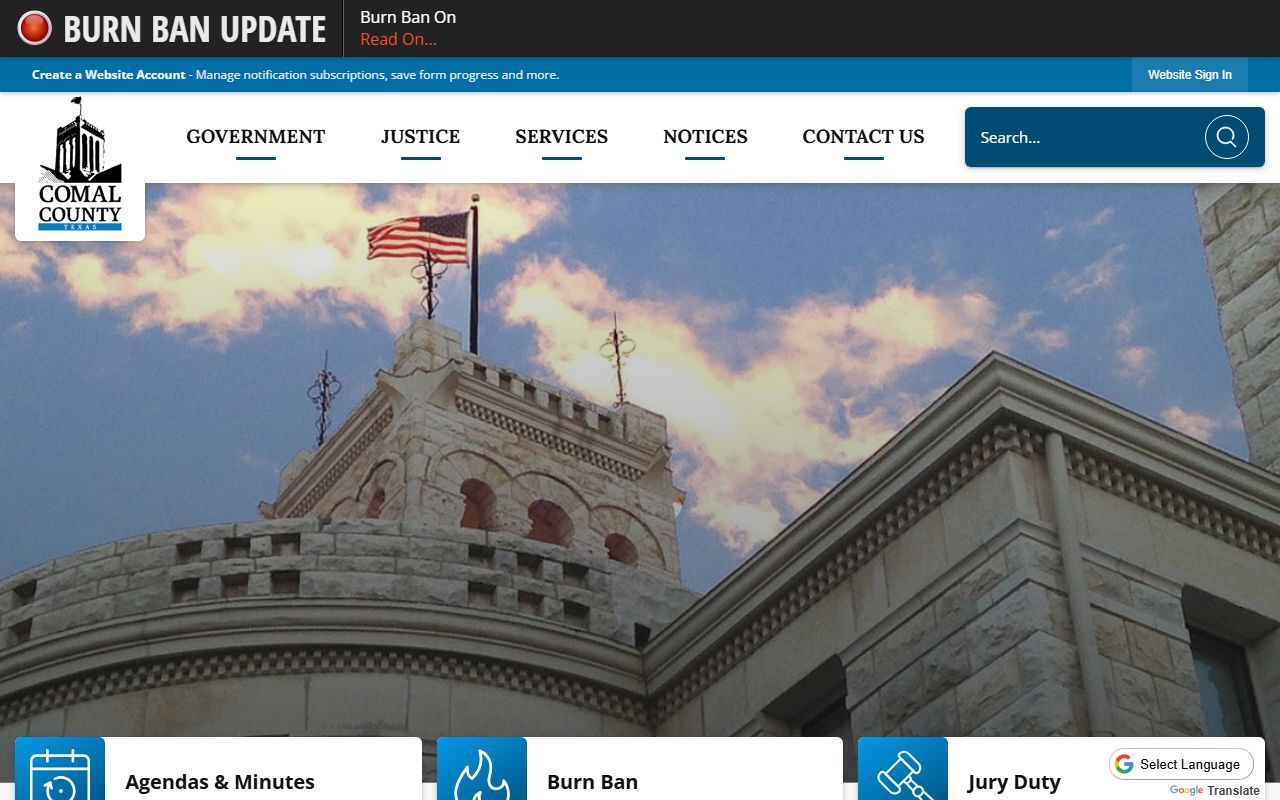
County property and tax records maintained in New Braunfels are often reviewed alongside federal bankruptcy filings to get a full picture of a debtor's assets in Comal County.
Filing Bankruptcy in Comal County
To file for bankruptcy in Comal County, you submit your petition and schedules to the Western District of Texas, San Antonio Division. All filings must follow the court's local rules, which are posted on the Western District forms and local rules page. The local rules require submitting one original and one copy of forms, a Pro Se Questionnaire if you are filing without an attorney, and a creditor matrix with verification.
Attorneys file electronically through the court's CM/ECF system. If you are an individual filing without an attorney, you can file paper forms at the San Antonio clerk's office. The clerk's staff can confirm receipt and answer procedural questions, but they cannot give legal advice. Most people find it helpful to consult with a bankruptcy attorney before filing.
Filing fees follow the standard federal schedule. Chapter 7 costs $338. Chapter 13 costs $313. Chapter 11 costs $1,738. If your income is below 150% of the federal poverty line, you may apply for a fee waiver when you file. The court reviews the waiver application and decides if you qualify.
Before you file, you must complete a credit counseling course from an approved provider within the 180 days before your filing date. After the case is filed, you must also complete a debtor education course to receive a discharge. Approved providers are listed on the U.S. Trustee website.
Note: The Western District requires a creditor matrix with verification submitted along with the initial filing, and pro se filers must also submit a completed Pro Se Questionnaire.
Comal County Bankruptcy Resources
Several offices and databases support bankruptcy research in Comal County. The county clerk in New Braunfels keeps property and deed records that creditors and trustees review when evaluating a debtor's real estate holdings. You can access county records through the Comal County Government website.
For case statistics and research data on bankruptcy filings across the Western District of Texas, the Federal Judicial Center publishes detailed records on case outcomes, filing volumes, and district-level trends. This data is free and open to the public.
Key resources for Comal County bankruptcy matters:
- Western District Bankruptcy Court - case filing and docket access
- PACER - search all federal court records online
- U.S. Trustee Region 7 - trustee oversight and approved counselors
- Comal County Government - property records, tax records
- Western District Local Rules and Forms
Nearby Counties in the San Antonio Division
The San Antonio Division of the Western District handles bankruptcy cases for Comal County and many surrounding counties in Central and South Texas. If you are researching cases from this region, you search the same court system.