
Fisher County Bankruptcy Records
Fisher County bankruptcy records are filed with the Northern District of Texas Bankruptcy Court and handled through the Abilene Division. If you need to search for a bankruptcy case tied to Fisher County, you can look up filings on PACER or contact the court clerk directly. The county seat is Roby, and residents here follow Northern District rules when they file for relief under federal bankruptcy law. This page covers how to find records, what they contain, and where to go for help.
Fisher County Overview
Northern District Court - Abilene Division
Fisher County is part of the Northern District of Texas Bankruptcy Court. The Abilene Division handles cases for this area of West Texas. While hearings take place in Abilene, cases are filed centrally through the Northern District. The court operates under the federal bankruptcy code and its own local rules, which are posted at txnb.uscourts.gov.
When someone in Fisher County files for bankruptcy, they submit paperwork to the Northern District. The Abilene Division then schedules a 341 meeting of creditors. That meeting is a short hearing where a trustee asks the debtor questions under oath. Most Chapter 7 cases last about four to six months from start to discharge.
| Court | Northern District of Texas Bankruptcy Court |
|---|---|
| Division | Abilene Division |
| Filing Location | Cases filed in Lubbock; hearings in Abilene |
| Website | txnb.uscourts.gov |
| Forms | txnb.uscourts.gov/forms |
How to Find Fisher County Bankruptcy Filings
The main way to search Fisher County bankruptcy records is through PACER, which stands for Public Access to Court Electronic Records. PACER gives you access to case dockets, filed documents, and discharge orders. You can sign up at pacer.uscourts.gov. There is a small per-page fee for most searches, though low-usage accounts get a quarterly credit.
To search, log into PACER and select the Northern District of Texas. You can look up cases by name, case number, or Social Security number if you have the right credentials. The docket shows every document filed in the case. You can pull the petition, schedules, and the discharge order if one was granted. These are the core records most people need.
Under 11 U.S.C. § 107, bankruptcy papers are public records with limited exceptions. Some personal information like Social Security numbers is redacted before documents go public. But the substance of the filing, including debts listed and assets claimed, is available to anyone who searches.
You can also call the court's Voice Case Information System at 866-222-8029 for basic case status. That line is free and works without a PACER account. It gives you case numbers, filing dates, and discharge information.
The Northern District of Texas posts all bankruptcy court information, local rules, and filing guides on its official website. Visit the Northern District of Texas Bankruptcy Court for current procedures and required forms for Fisher County filers.
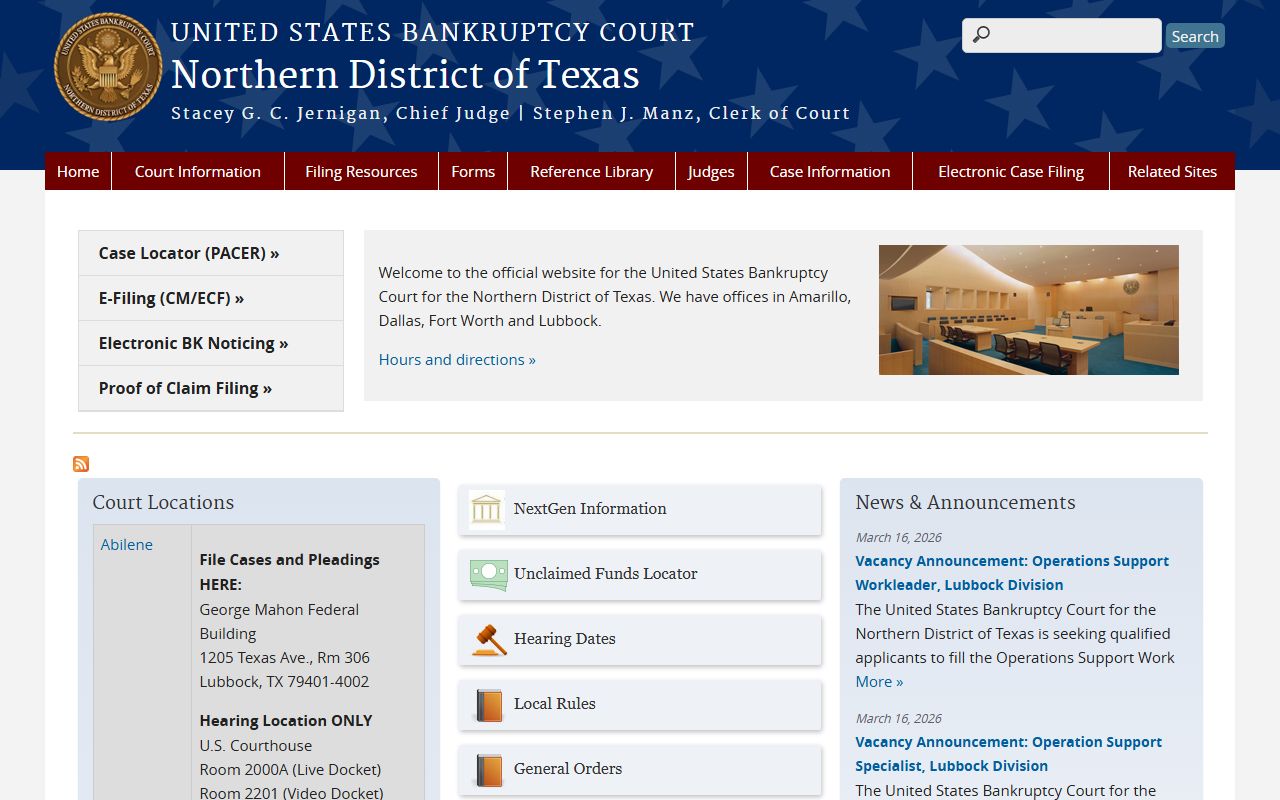
The Northern District court website is the authoritative source for filing requirements, local rules, and case lookup tools that apply to Fisher County residents.
Chapter 7 and Chapter 13 Cases in Fisher County
Most Fisher County bankruptcy cases are either Chapter 7 or Chapter 13. Chapter 7 is a liquidation case. A trustee reviews your assets and can sell non-exempt property to pay creditors. In practice, most Chapter 7 filers in Texas keep all their property because the state exemptions are strong. The homestead exemption under Texas law is unlimited in value, though it has acreage limits. Personal property exemptions cover vehicles, furniture, and other items up to set dollar amounts.
Chapter 13 is a repayment plan case. Instead of liquidating assets, you propose a three to five year payment plan to pay back some or all of your debts. At the end of the plan, remaining eligible debts get discharged. Chapter 13 works well for people who have steady income and want to keep property that would otherwise go to a trustee in Chapter 7.
Both chapters result in an automatic stay the moment you file. The automatic stay stops most collection actions, including calls, lawsuits, wage garnishments, and foreclosures. It goes into effect immediately under federal bankruptcy law and applies to Fisher County filers just as it does everywhere else in the country.
Note: Chapter 7 cases require passing a means test based on your income compared to the Texas median. If you earn too much, you may need to file Chapter 13 instead.
U.S. Trustee Office for Fisher County
The U.S. Trustee for Fisher County cases is part of Region 6, which is based in Dallas. The U.S. Trustee program oversees bankruptcy administration across the country. In each case, the trustee reviews the debtor's petition, checks for fraud, and conducts the 341 meeting. The U.S. Trustee regional office information is available through the Department of Justice website.
The U.S. Trustee also monitors attorneys and petition preparers in Fisher County cases. If a filer pays someone to help prepare papers, that person must follow strict rules. The trustee can remove a case preparer who charges too much or provides legal advice without a license. Most Fisher County residents who file on their own can get help from the court's self-help resources.
What Fisher County Bankruptcy Records Include
A bankruptcy case file from Fisher County contains several types of documents. The voluntary petition is the main filing that starts the case. It states which chapter the debtor is filing under and lists basic information about their finances. Along with the petition, debtors must file schedules that detail all assets, all debts, income, and monthly expenses. These schedules are the core of the bankruptcy record.
Other documents in the file include the statement of financial affairs, the means test calculation, and any reaffirmation agreements the debtor signs with creditors. A reaffirmation agreement lets a debtor keep a secured item, like a car, by agreeing to keep paying. The file also includes the 341 meeting transcript if one is available, creditor claims filed by lenders, and the discharge order at the end of a successful case.
Fisher County filers also submit a creditor matrix, which is a list of every creditor with their mailing address. The court uses this to send out notice of the filing. All of these documents are public under 11 U.S.C. § 107, with limited redactions for personal identifiers.
Fisher County Government Resources
The Fisher County government maintains records at the Roby courthouse. The County Clerk's office keeps property records, which are separate from federal bankruptcy files. If you need to check whether a bankruptcy case affected property in Fisher County, you would search both PACER for the federal case and the County Clerk for local liens or deed transfers.
Property records matter in bankruptcy because the bankruptcy estate includes all real and personal property the debtor owns. If a debtor in Fisher County owns land or a home, that property is disclosed in the schedules. The trustee reviews the value and whether any exemptions apply. The County Clerk's records help verify the legal description and ownership chain for any real property in the case.
Nearby Counties
These counties are near Fisher County and also file through the Northern District of Texas.