
Hardeman County Bankruptcy Records
Hardeman County bankruptcy records are filed and maintained through the Northern District of Texas Bankruptcy Court. If you need to search for a bankruptcy case filed by a Hardeman County resident or business, you can look up filings online through PACER or contact the Northern District clerk's office directly. The county seat is Quanah, and all federal bankruptcy matters for this North Texas county go through the Northern District court system. Cases include Chapter 7 liquidation, Chapter 13 wage-earner plans, and Chapter 11 reorganizations. These records are public under federal law and accessible to anyone with a PACER account.
Hardeman County Overview
Hardeman County Federal Bankruptcy Court
Hardeman County is served by the Northern District of Texas Bankruptcy Court. This federal court handles all bankruptcy cases for Hardeman County residents and businesses. The Northern District covers a broad area of North and West Texas, and the specific division that serves Hardeman County handles cases from several counties in the region.
The Northern District clerk's office can confirm case numbers, provide docket details, and help you locate filed documents. If you are looking for a specific case, you will need the debtor's full name or the case number to run an effective search. The court handles all three main chapter types filed by individuals and businesses in the county.
| Court | U.S. Bankruptcy Court, Northern District of Texas |
|---|---|
| County Seat | Quanah, TX |
| Website | txnb.uscourts.gov |
| VCIS | 866-222-8029 (free basic case info) |
The Voice Case Information System, or VCIS, is available at 866-222-8029. This free phone line gives you basic case details like case status, filing date, and chapter type without needing a PACER account. It is a good first step if you just need to confirm whether a case exists.
Searching Hardeman County Bankruptcy Records
The main tool for searching Hardeman County bankruptcy records is PACER, the federal court's online records system. PACER lets you search by debtor name, case number, or Social Security number. You create a free account and pay a small per-page fee when you view documents. Basic case info is often free, and you only pay when you download or view full court documents.
Through PACER you can pull the full case docket, schedules of assets and liabilities, the list of creditors, any trustee reports, and orders from the judge. For older paper-based cases that were filed before electronic records, you may need to contact the clerk's office or request records through the National Archives. The clerk's office can tell you how far back the electronic records go for this division.
Hardeman County bankruptcy records are public under 11 U.S.C. § 107. Most filed documents are open to the public. The court can restrict access to documents with sensitive personal data, but that is the exception, not the rule. Under Fed. R. Bankr. P. 9037, filers must redact Social Security numbers, birth dates, and financial account numbers from public documents.
The Hardeman County Government website offers property and county records maintained by the county clerk. These records can be useful in a bankruptcy case to track real property, tax status, and deed history. County property records are separate from federal bankruptcy filings and are not found in PACER.
The Hardeman County Government website provides access to county clerk records, property data, and other public records that may be relevant to bankruptcy proceedings in this North Texas county.
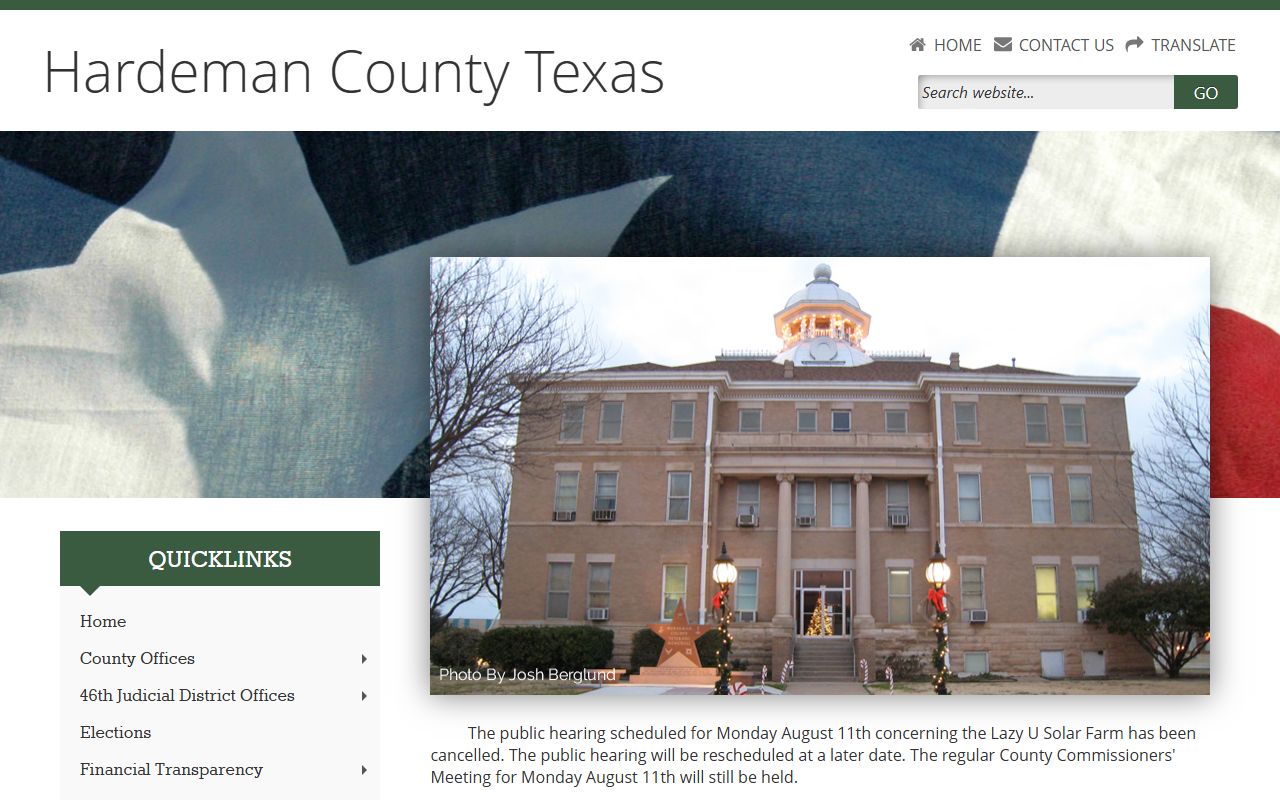
County records in Hardeman County, including deed history and property tax data, can support bankruptcy filings where the debtor holds real property in the Quanah area.
Filing for Bankruptcy in Hardeman County
To file for bankruptcy in Hardeman County, you submit your petition to the Northern District of Texas Bankruptcy Court. The court's local rules and required forms are posted on the Northern District case information page. You must follow all local rules, which include specific formatting requirements for the creditor matrix and identity verification procedures at the 341 meeting of creditors.
Filing fees follow the standard federal schedule. Chapter 7 costs $338. Chapter 13 costs $313. Chapter 11 costs $1,738. If your income falls below 150% of the federal poverty level, you can apply for a fee waiver when you file. The court reviews your application and grants waivers on a case-by-case basis. You can also request to pay in installments if you cannot pay the full fee at the time of filing, though at least 50% is typically due within a few days.
Before filing, you must complete a credit counseling course from an approved provider within the 180 days before your case. After filing, debtors must also finish a debtor education course before they can receive a discharge. Approved providers are listed on the U.S. Trustee website at justice.gov/ust.
Most attorneys file electronically through the court's CM/ECF system. Pro se filers who are individuals can also file through the Electronic Self-Representation portal or by bringing paper forms to the clerk's office. Staff at the clerk's office can confirm what you need to file but cannot give legal advice.
Note: The Northern District accepts cashier's checks or money orders made payable to "Clerk, U.S. Bankruptcy Court" for filing fee payments.
Hardeman County Bankruptcy Resources
Several offices and systems are useful when dealing with bankruptcy records or filings in Hardeman County. The county clerk at the Quanah courthouse handles property deeds, real estate records, and other county-level public records. These records can matter in a bankruptcy case when the trustee or court needs to confirm what property the debtor owns.
Key resources for Hardeman County bankruptcy matters:
- Northern District Bankruptcy Court - case filings and docket access
- PACER - online search for all federal court records
- U.S. Trustee Region 6 - trustee oversight and approved credit counselors
- Hardeman County Government - property records and county public records
- Northern District Case Information - forms and local procedures
The U.S. Trustee for Hardeman County cases falls under Region 6, which is based in Dallas. The regional trustee office oversees case administration and ensures debtors meet their obligations under the federal Bankruptcy Code. For trustee-related questions, contact the Dallas office directly.
Nearby Counties
These neighboring counties are also served by the Northern District of Texas Bankruptcy Court and follow the same filing procedures as Hardeman County.