
Search Bankruptcy Records in Hunt County
Hunt County bankruptcy records are filed through the Eastern District of Texas Bankruptcy Court, which serves the county's Greenville area residents and businesses. You can search for bankruptcy cases online through PACER or contact the Eastern District clerk directly. Cases include Chapter 7 liquidation, Chapter 11 reorganization, and Chapter 13 repayment plan filings. These records are public under federal law and available to anyone who needs to look them up.
Hunt County Overview
Hunt County Federal Bankruptcy Court
Hunt County is served by the Eastern District of Texas Bankruptcy Court. The Eastern District has several divisions across northeast and east Texas, and Hunt County residents file in this district when they need bankruptcy relief. The court handles all main case types, including Chapter 7, Chapter 11, and Chapter 13 filings.
The county seat in Greenville sits in Northeast Texas, making Hunt County part of the Eastern District's jurisdiction. This district covers a large swath of the state from the Oklahoma border south through east Texas. If you have a case number and need to check the status, you can log into PACER or call the clerk's office for basic case information. The clerk cannot give legal advice but can confirm filing dates, case numbers, and assigned trustees.
| Court | U.S. Bankruptcy Court, Eastern District of Texas |
|---|---|
| County Seat | Greenville, TX |
| Website | txeb.uscourts.gov |
| U.S. Trustee | Region 6, Dallas |
The U.S. Trustee for Hunt County cases is part of Region 6, which is based in Dallas. The trustee's office monitors case administration, reviews debtor filings for compliance, and oversees the 341 meeting process. You can find Region 6 contact details through the U.S. Trustee regional offices page.
Searching Hunt County Bankruptcy Records
The main tool for finding Hunt County bankruptcy records is PACER, the federal court's electronic access system. You register for a free account and then pay a small per-page fee to view documents. Basic case lookups, including the debtor name, case number, chapter type, and filing date, are often available at low or no cost. PACER works for all federal courts, so one account covers every district in Texas and every other state.
The Eastern District of Texas also has a local case search tool on its website. You can browse the txeb.uscourts.gov site to find forms, local rules, and general case information. For old cases that predate electronic filing, you may need to request records through the National Archives or contact the clerk directly. The court has maintained electronic records for most cases filed in recent decades, so older paper records are the main exception.
Hunt County bankruptcy records are public under 11 U.S.C. § 107. That statute confirms that most bankruptcy filings are open to the public. Courts can seal specific documents when there is good reason, but most case files are fully accessible. Personal identifiers like Social Security numbers must be partially redacted in filed documents per Fed. R. Bankr. P. 9037.
The Hunt County Government website handles local services like property records and tax information. County records are separate from federal bankruptcy filings, but they can come up in cases where property ownership needs to be verified. The county clerk at the Greenville courthouse is the right contact for deeds, liens, and related property documents.
The Hunt County Government website at huntcounty.net provides access to local property records and county services that may be relevant during bankruptcy proceedings.
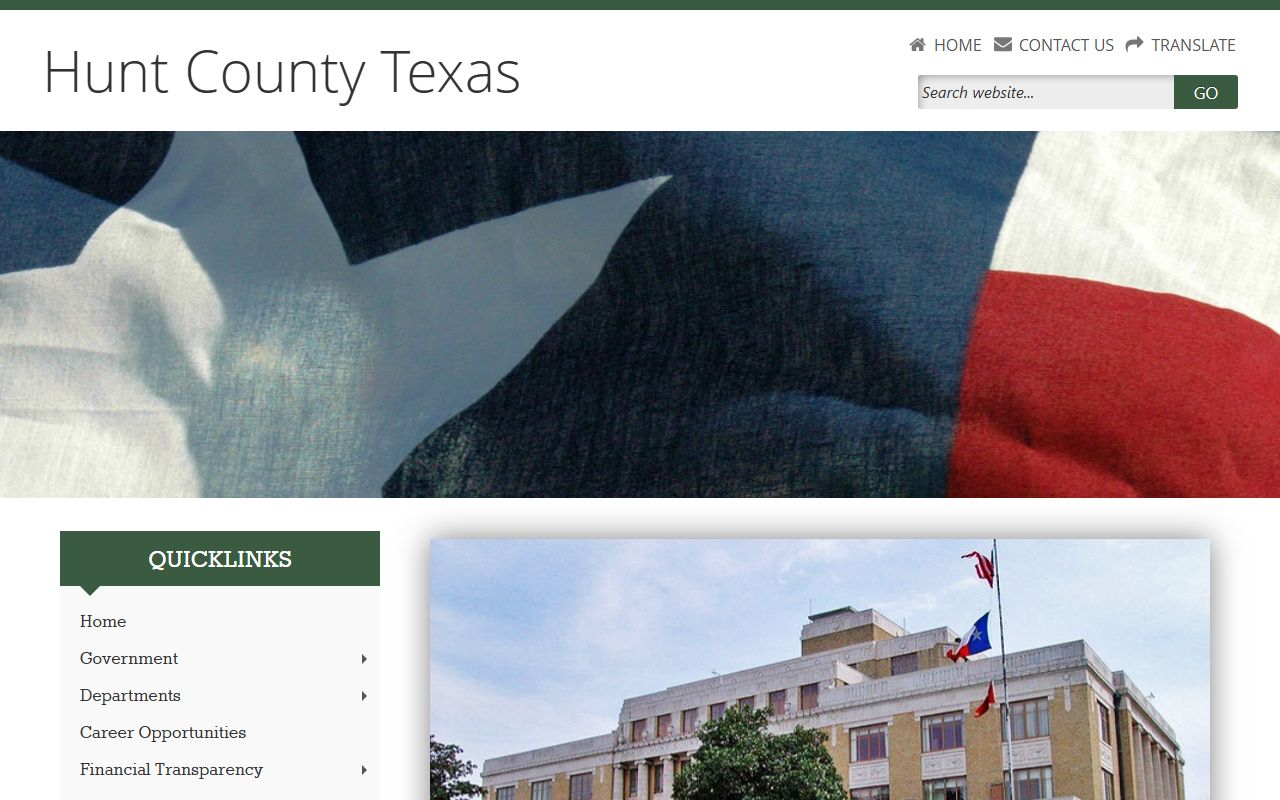
Hunt County's property and tax records maintained at the Greenville courthouse can be important reference points when courts need to identify assets in an active bankruptcy case.
Filing Bankruptcy in Hunt County
Hunt County residents file for bankruptcy in the Eastern District of Texas. All petitions and schedules must follow the court's local rules, which you can find on the Eastern District forms and local rules page. These rules cover everything from how to list creditors to what documents you need to bring to the 341 meeting of creditors. Reading the local rules before you file can save time and prevent your case from being dismissed on a technicality.
Attorneys who practice in the Eastern District file electronically through CM/ECF. Individual debtors without attorneys can file paper forms at the clerk's office or, in many cases, use the court's self-represented filing options. The clerk's staff can confirm whether your documents were received and give you your case number, but they cannot advise you on what to file or how to handle your case.
Filing fees follow the federal schedule. Chapter 7 costs $338, Chapter 13 costs $313, and Chapter 11 costs $1,738. If your household income falls below 150% of the federal poverty line, you may apply for a fee waiver when you submit your petition. The court decides whether you qualify based on your financial disclosure forms.
Before you file, you must complete a credit counseling course from an approved provider within 180 days of your filing date. After your case is active, you also need to finish a debtor education course to receive your discharge. The U.S. Trustee maintains a list of approved agencies at justice.gov/ust. Both courses are required without exception for individual debtors.
Hunt County Bankruptcy Resources
Several offices and agencies provide support for Hunt County bankruptcy matters. The county clerk at the Greenville courthouse handles property records and local filings that may come up during a bankruptcy case. You can reach county government services through huntcounty.net. These records help verify real estate ownership and identify any liens tied to county property.
The Eastern District Bankruptcy Court site covers everything you need for federal filings. You can access local rules, required forms, trustee assignments, and the court's filing procedures all in one place. The court's CM/ECF system handles all electronic filings for attorneys, while the clerk's office at the main courthouse assists pro se debtors with paper submissions.
Key resources for Hunt County bankruptcy matters:
- Eastern District of Texas Bankruptcy Court - case access, local rules, filing info
- PACER - search all federal court records online
- U.S. Trustee Region 6 - trustee oversight and approved credit counselors
- Hunt County Government - property records, county services
- Eastern District Local Rules and Forms
Note: Hunt County debtors must bring valid photo ID and any documents requested by their assigned trustee to the 341 meeting of creditors.
Nearby Counties
Hunt County borders several counties in Northeast Texas that are also served by the Eastern District. If you need to research a case from the surrounding area, these counties share the same federal court system.