
Find Bankruptcy Records in San Augustine County
San Augustine County bankruptcy records are filed through the Eastern District of Texas Bankruptcy Court, Lufkin Division. Cases from the San Augustine area become part of the federal court record and are searchable through the PACER system. This guide explains which court handles filings for this county, how to search the case database, what to expect when filing, and where to find local resources connected to bankruptcy proceedings.
San Augustine County Overview
Eastern District Bankruptcy Court - Lufkin Division
The Eastern District of Texas Bankruptcy Court handles all San Augustine County bankruptcy cases through its Lufkin Division. Administrative services for this division are provided from the Beaumont and Tyler clerk's offices. San Augustine County is in a dense forest region of East Texas, and the Lufkin Division covers this area along with several nearby counties.
Cases assigned to this division are heard by Eastern District bankruptcy judges. Hearings can take place in Beaumont, Tyler, or at other locations in the district depending on the judge's calendar. If you receive a notice with a hearing date and location, follow that carefully. Missing a hearing can result in your case being dismissed. The court's website has current contact information and a court calendar.
| Court | Eastern District of Texas Bankruptcy Court |
|---|---|
| Division | Lufkin Division |
| Administrative Offices | Beaumont and Tyler, TX |
| Website | txeb.uscourts.gov |
| Forms | txeb.uscourts.gov/forms |
The San Augustine County government website provides access to local offices including the County Clerk, who keeps property records that often appear in bankruptcy asset schedules filed with the federal court.
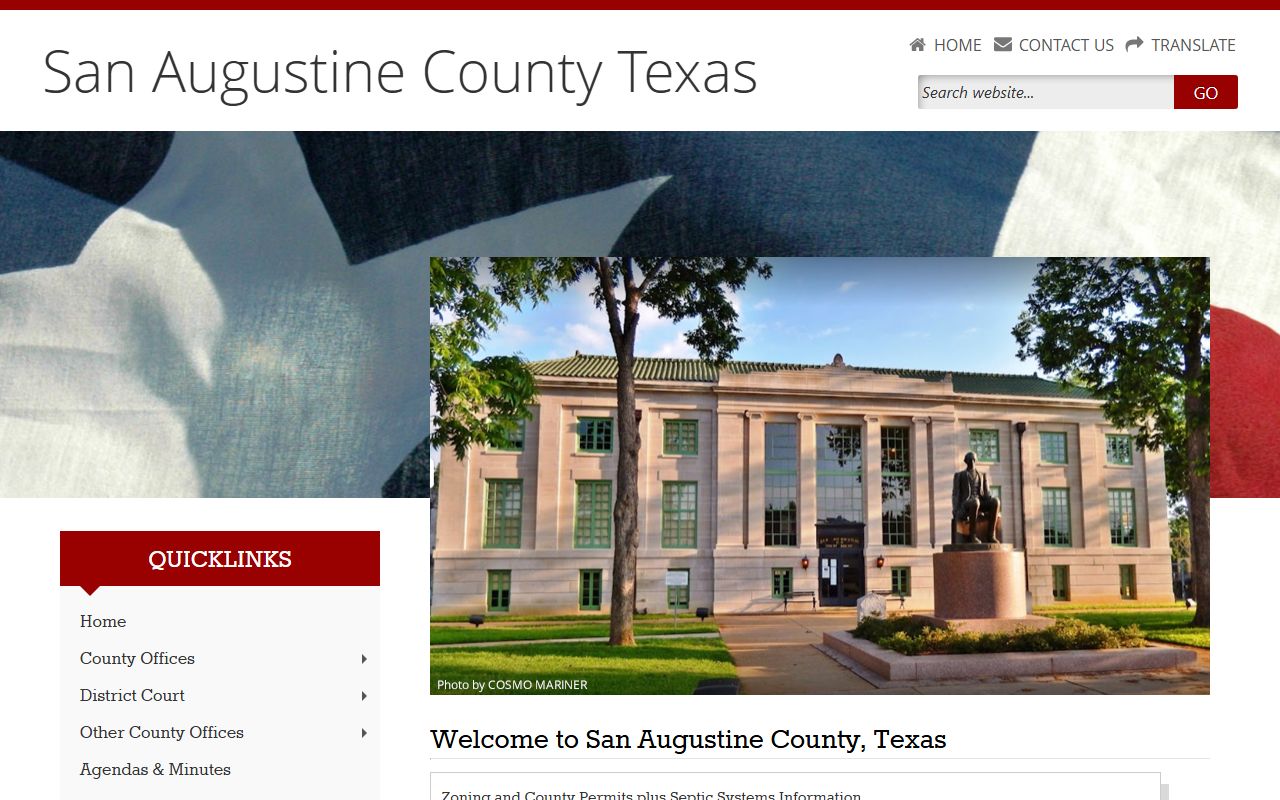
County property and deed records in San Augustine are kept at the courthouse in the city of San Augustine, the county seat.
How to Access San Augustine County Bankruptcy Records
Federal bankruptcy case records for San Augustine County are in the PACER system. You can register at pacer.uscourts.gov. After you sign in, pick the Eastern District of Texas court and search for a debtor's name or case number. The search pulls up a list of matching cases with filing dates, chapter types, and case status. You can click into each case to see the full docket and individual documents.
PACER charges a small per-page fee to view most documents. However, if your quarterly usage stays under $30, the fee is waived entirely. Most people researching one or two cases never reach that limit. Searches themselves are often free or cost only a few cents. For certified copies, contact the clerk's office by mail or visit in person.
State-level records, like civil court judgments and tax liens, can be found through the re:SearchTX portal. This does not include federal bankruptcy filings, but it can show you if a creditor had a state court judgment before a bankruptcy was filed. That matters because some judgments attach to real property and can affect how a bankruptcy case plays out.
Filing Bankruptcy as a San Augustine County Resident
San Augustine County residents file in the Eastern District of Texas. The venue rule under 28 U.S.C. § 1408 requires that you file where you have lived or had your main place of business for most of the 180 days before filing. That is the Eastern District for residents of this county.
A credit counseling certificate is required before you can file. Under 11 U.S.C. § 109(h), the course must be from an approved agency and taken within 180 days before your petition date. The list of approved providers is on the U.S. Trustee website. You submit the certificate along with your petition when you file.
Chapter 7 is the fastest route for people who pass the means test. It wipes out most unsecured debt. Chapter 13 takes longer but lets you keep assets and catch up on secured debt like a home mortgage. Either way, the Eastern District's local rules apply and add requirements beyond the national forms. Read them before you prepare your petition.
Filing fees are set by Congress. Chapter 7 currently costs $338 and Chapter 13 costs $313. A fee waiver is available for Chapter 7 filers with income below 150% of the federal poverty level. You apply on Official Form 103B at the time you file. The court decides whether to grant it, allow installments, or deny the request.
Note: Always verify current fees with the court before filing. Fee amounts can change by congressional action.
Local Resources and County Clerk
The San Augustine County Clerk handles deed records, property filings, and local court records at the county courthouse. While the County Clerk has no role in federal bankruptcy cases, their records often matter to how a case unfolds. Property you own in San Augustine County will appear in your bankruptcy schedules. Liens filed with the county can affect whether a creditor has a secured claim in your case.
The U.S. Trustee for this part of East Texas is based in Tyler. You can find contact information for the Tyler field office through the U.S. Trustee regional offices page. The Trustee reviews all bankruptcy filings in the Eastern District for compliance and can raise objections if a case appears to be filed improperly or in bad faith under 11 U.S.C. § 707.
If you need legal help, Texas legal aid organizations serve East Texas residents. Lone Star Legal Aid covers this part of the state and offers free or low-cost help to those who qualify by income. Their number is (800) 733-8394.
Nearby Counties
These counties are near San Augustine County and share the Eastern District of Texas court system.